









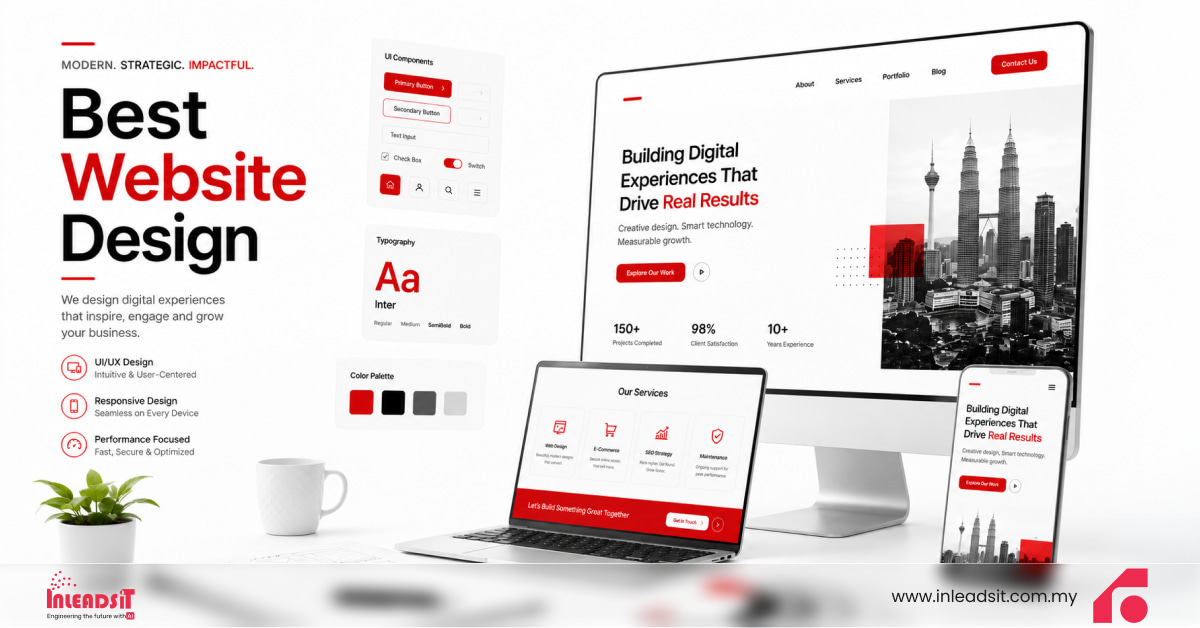
The best website design combines visual appeal, strong branding, intuitive user experience, fast performance, and search engine visibility. A business website is no longer simply an online brochure. It is often the first point of contact between a company and its customers, making website design an important part of your overall brand identity and digital marketing strategy.
Modern businesses need websites that do more than look attractive. A successful website should communicate the brand clearly, guide visitors toward important actions, work seamlessly across devices, load quickly, and provide a consistent experience throughout the customer journey.
At Inleads IT Solution, we create professional website design solutions that bring together branding, UI/UX design, responsive development, SEO, performance optimization, and conversion-focused functionality. Our approach focuses on building websites that represent each business professionally while supporting measurable growth.
What Makes the Best Website Design?
The best website design is not determined by appearance alone. A visually impressive website can still perform poorly if visitors cannot find information, pages load slowly, or the branding does not communicate the company’s value.
A high-quality business website should balance several important elements:
- Strong and consistent branding
- Clear website structure
- Intuitive navigation
- Responsive mobile design
- Fast page performance
- Accessible user interfaces
- Search-friendly architecture
- Engaging and useful content
- Clear calls to action
- Secure technical infrastructure
The goal is to create a digital experience where design and business objectives work together.
Strong Branding Should Be at the Center of Website Design
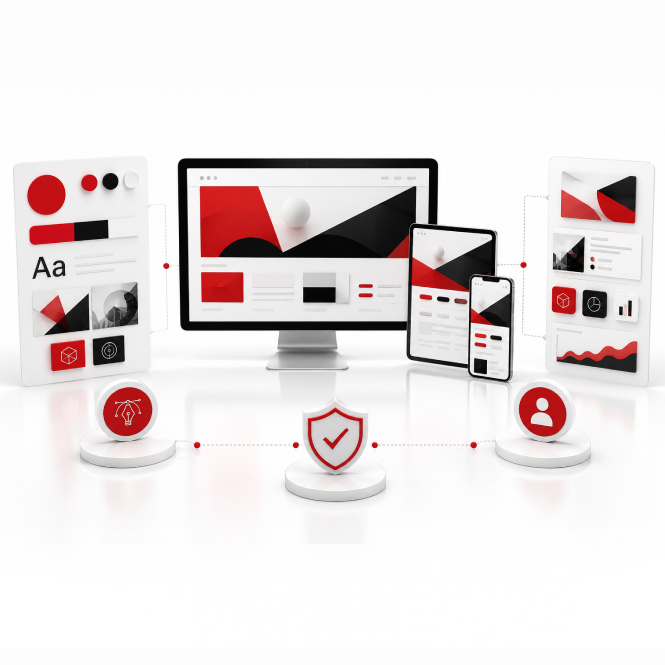 Your website should look and feel like your brand rather than a generic template. Consistent branding helps customers recognize your business and develop confidence in your products or services.
A strong branded website should incorporate:
Logo and Brand Identity
Your logo should be positioned consistently and remain clear across desktop and mobile layouts. It should work naturally with the rest of your visual identity rather than appearing as an isolated graphic.
Brand Colors
Your website color palette should reflect your existing brand guidelines. Primary and secondary colors can be used to establish visual hierarchy, highlight important information, and strengthen recognition.
Typography
Typography plays a major role in brand personality. Professional businesses may benefit from clean, structured typefaces, while creative brands can use more expressive typography. Whatever style you choose, readability should remain a priority.
Photography and Graphics
Images, illustrations, icons, videos, and graphics should support the brand message. Consistent visual treatment creates a more professional experience across the website.
Brand Voice
Visual branding should be supported by consistent messaging. Headlines, product descriptions, calls to action, and other content should communicate in a tone that matches the company’s personality.
At Inleads IT Solution, we consider branding an important part of the website design process so the final website becomes a consistent extension of the business identity.
Bold Typography and Strong Visual Hierarchy
Bold typography continues to influence modern website design. Large headlines can communicate the main message quickly and create a strong visual focal point.
However, oversized text should be used strategically.
A good typographic hierarchy typically includes:
- A clear primary headline
- Supporting subheadings
- Easy-to-read body text
- Highlighted key information
- Clearly visible calls to action
Typography should guide visitors through the page instead of making the design difficult to read.
For example, a homepage might use a strong headline to explain the company’s primary value proposition, followed by supporting content and a prominent CTA such as Request a Consultation, Get a Quote, or Contact Our Team.
Mobile-First Responsive Design
A modern website must work effectively across smartphones, tablets, laptops, and large desktop displays.
Mobile-first design means considering smaller screens during the initial design process instead of treating mobile responsiveness as an afterthought.
Important considerations include:
- Touch-friendly buttons
- Simple mobile navigation
- Readable typography
- Responsive images
- Flexible layouts
- Easy-to-complete forms
- Fast loading on mobile connections
- Minimal unnecessary elements
A responsive website should not simply shrink the desktop version. Its layout, navigation, spacing, and content presentation should adapt to the user’s device.
Fast Website Performance
 Performance is one of the most important characteristics of the best website design. Visitors are less likely to engage with a website when pages take too long to load.
Performance optimization can include:
- Image compression
- Modern image formats
- Browser caching
- Efficient code
- Reduced JavaScript
- Optimized CSS
- Content delivery networks
- Reliable hosting
- Database optimization
- Lazy loading
Website speed also supports SEO and user experience. For businesses, faster pages can help reduce friction between landing on a website and completing an action.
At Inleads IT Solution, performance is considered during design and development rather than being treated solely as a post-launch improvement.
Intuitive Navigation and User Experience
A website can contain excellent content and still fail if visitors cannot find what they need. Effective navigation should make important information easy to access.
Common navigation elements include:
- Home
- About
- Services or Products
- Industries
- Portfolio or Case Studies
- Blog
- Contact
For larger websites, dropdown menus, search functionality, filters, and category structures can help users locate information more efficiently.
The navigation structure should reflect how customers think about your business rather than how the internal organization of the company works.
Modern Bento Grid Layouts
Bento grid layouts have become increasingly popular in modern website design. This approach divides content into organized blocks of different sizes, creating a structured yet flexible visual experience.
Bento layouts can be useful for displaying:
- Services
- Product features
- Statistics
- Benefits
- Case studies
- Testimonials
- Company information
The design works particularly well for businesses that need to communicate several key messages without creating long walls of text.
However, a bento layout should still maintain a clear information hierarchy. Decorative blocks should never make important content difficult to find.
Micro-Interactions and Subtle Animation
Animation can make a website feel more interactive and engaging when used carefully.
Examples include:
- Button hover effects
- Animated icons
- Scroll-based transitions
- Image reveals
- Navigation animations
- Loading indicators
- Interactive cards
The purpose of animation should be to improve communication and interaction rather than simply add visual effects.
Excessive animation can slow down a website, distract visitors, or create accessibility problems. The best website design uses motion with purpose.
Accessibility Should Be Part of the Design
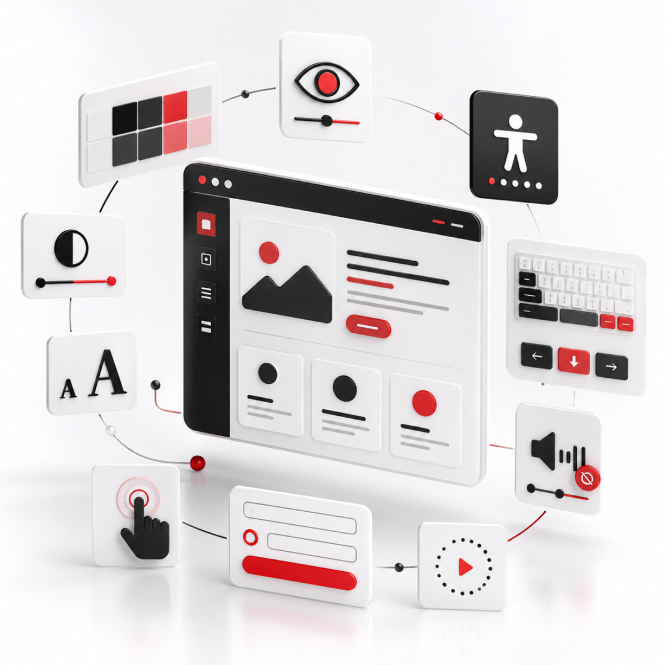 Professional websites should be designed so that as many people as possible can use them effectively.
Accessibility considerations include:
- Sufficient color contrast
- Readable text
- Keyboard navigation
- Descriptive image alternative text
- Clear form labels
- Logical heading structures
- Accessible buttons and links
- Avoiding unnecessary motion
Accessibility is not simply a technical requirement. It contributes to a better experience for all users.
SEO-Friendly Website Architecture
The best website design should support search engine optimization from the beginning. SEO should not be added only after a website has been developed.
Important considerations include:
- Clean URL Structure: URLs should be logical and easy for users and search engines to understand.
- Proper Heading Structure: Use H1, H2, and H3 headings to establish a clear content hierarchy.
- Internal Linking: Relevant internal links help visitors navigate between related pages while helping search engines understand the relationship between content.
- Metadata: Each important page should have an optimized title tag and meta description that accurately describe its content.
- Structured Data: Schema markup can help search engines understand information such as businesses, products, services, articles, events, and other entities.
- Image Optimization: Images should use descriptive file names and appropriate alternative text while being compressed for performance.
SEO-friendly design creates a stronger technical foundation for long-term organic visibility.
Conversion-Focused Website Design
A business website should have a purpose. Depending on the company, that purpose may be generating leads, selling products, receiving enquiries, booking appointments, or encouraging visitors to contact a sales team.
Conversion-focused design uses clear calls to action throughout the customer journey.
Examples include:
- Get a Free Quote
- Book a Consultation
- Request a Demo
- Contact Us
- Shop Now
- Download a Guide
- Schedule an Appointment
CTAs should be visible without overwhelming the visitor. Landing pages should also minimize distractions and focus users on one primary action.
Website Design Services for Different Business Needs
Different businesses require different website solutions. A small local business may need a simple lead-generation website, while an enterprise organization may require complex integrations and custom functionality.
- Corporate Website Design: Corporate websites focus on professional branding, services, company information, trust signals, and lead generation.
- E-Commerce Website Design: E-commerce websites require product catalogs, search and filtering, shopping carts, payment gateways, inventory systems, order management, and secure checkout.
- Custom Website Design: Custom websites provide greater flexibility for businesses with unique branding or functionality requirements.
- WordPress Website Design: WordPress can provide a flexible platform for companies that need content management capabilities, blogs, service pages, and scalable website structures.
- Web Application Design: Businesses with customer portals, dashboards, booking platforms, membership systems, or specialized workflows may require a more customized digital application.
The Website Design Process
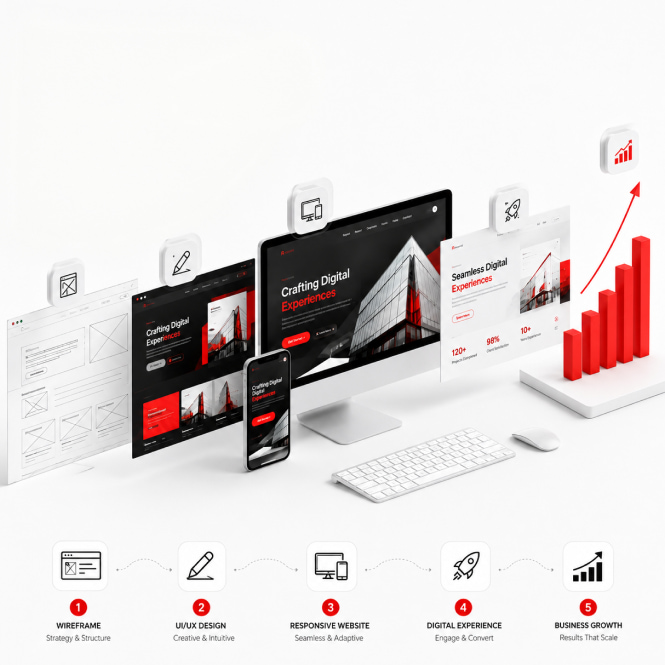 A professional website design project should follow a structured workflow.
Step 1: Discovery and Strategy
The project begins by understanding:
- Business objectives
- Target customers
- Competitors
- Brand identity
- Website requirements
- Conversion goals
Step 2: Sitemap and UX Planning
The development team creates the website structure and determines how visitors will navigate between pages.
Step 3: Wireframing
Wireframes establish the basic layout before detailed visual design begins.
Step 4: UI and Branding Design
The visual design brings together brand colors, typography, imagery, components, spacing, and other visual elements.
Step 5: Development
The approved designs are converted into a functional website using the selected CMS, framework, or development technology.
Step 6: Testing
The website is tested across different browsers, devices, screen sizes, forms, links, and functionality.
Step 7: SEO and Performance Optimization
Technical SEO, metadata, image optimization, caching, mobile performance, analytics, and other important elements are configured.
Step 8: Launch and Support
After final approval, the website is deployed. Ongoing maintenance and optimization help keep the platform secure and effective.
Best Website Design Trends to Watch
Website design continues to evolve as technology and user expectations change.
AI-Powered Personalization
Artificial intelligence can help websites deliver more personalized content, product recommendations, and customer experiences.
Conversational Interfaces
AI chatbots and conversational interfaces can help businesses provide instant assistance and qualify leads.
Interactive Experiences
Interactive elements can make complex products or services easier to understand.
Headless Website Architecture
Headless architectures separate the front-end experience from the content management system, allowing businesses greater flexibility across digital channels.
Accessibility-First Design
Accessibility is becoming increasingly important as organizations aim to create inclusive digital experiences.
Performance-First Development
Modern websites are increasingly designed around speed, efficient code, optimized media, and strong technical infrastructure.
Common Website Design Mistakes to Avoid
Even visually attractive websites can underperform when fundamental principles are ignored.
Common mistakes include:
- Using inconsistent branding
- Overloading pages with information
- Poor mobile optimization
- Slow-loading images
- Complicated navigation
- Weak calls to action
- Difficult-to-read typography
- Ignoring accessibility
- Poor technical SEO
- Using excessive animations
- Failing to maintain the website
The best website design focuses on the complete user journey rather than individual visual elements.
Why Choose Inleads IT Solution for Website Design?
At Inleads IT Solution, we combine website design, branding, UI/UX, development, SEO, and performance optimization to create digital experiences tailored to business objectives.
Our approach focuses on:
- Brand-Focused Design: We create websites that reflect your company’s visual identity, values, positioning, and target audience.
- Custom UI/UX: Our designs focus on intuitive navigation, clear information hierarchy, responsive layouts, and user-friendly interactions.
- SEO-Friendly Development: SEO considerations are integrated into the website structure, content organization, performance, and technical setup.
- Performance Optimization: We build websites with speed, responsiveness, and technical efficiency in mind.
- Scalable Solutions: Your website should be capable of evolving alongside your business. We create scalable structures that allow new pages, features, integrations, and functionality to be added as requirements change.
- Ongoing Support: Website development does not end at launch. Regular updates, security checks, performance monitoring, backups, and improvements help maintain long-term website quality.
Conclusion
The best website design is a balance between branding, creativity, usability, performance, accessibility, SEO, and business objectives. Modern websites need to look professional while also providing fast, intuitive, and meaningful experiences across every device.
Trends such as bold typography, bento grids, subtle animation, AI personalization, interactive experiences, and performance-first development are shaping the future of digital design. However, successful websites should not follow trends simply for visual appeal. Every design decision should support the brand and make it easier for visitors to understand, trust, and engage with the business.
At Inleads IT Solution, we help businesses create professional websites that combine strong branding with modern UI/UX, responsive development, SEO-friendly architecture, and performance optimization.
Whether you need a corporate website, e-commerce platform, WordPress website, or custom digital solution, our goal is to create a website that supports your business today and remains flexible for future growth.
Ready to build a website that represents your brand professionally? Contact Inleads IT Solution to discuss your website design requirements and create a digital experience built around your business goals.
Find us (Inleads IT Solution) on Google map.