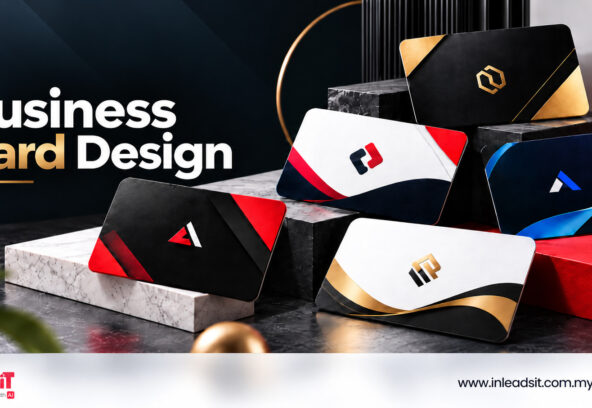










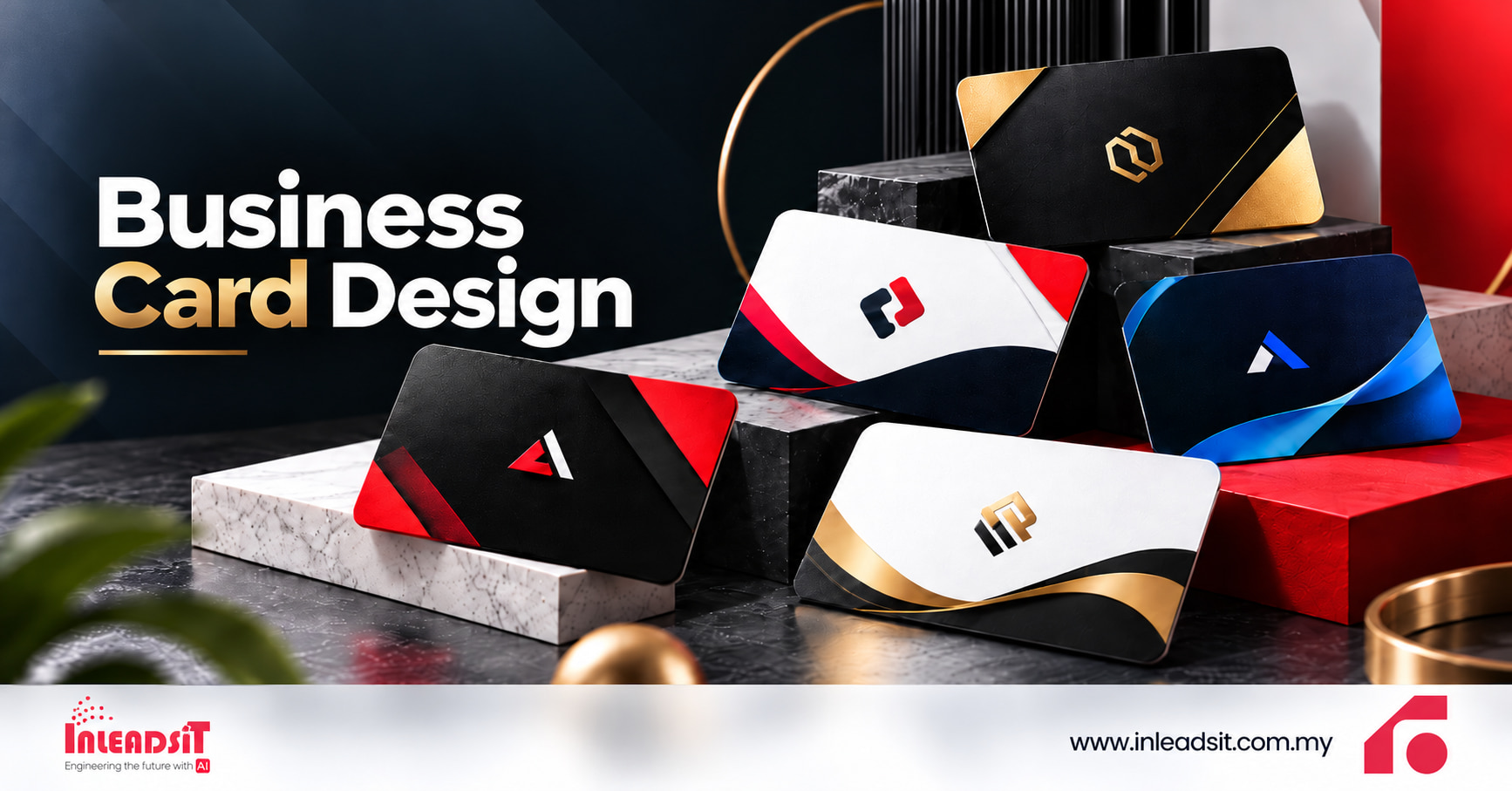
A professional business card is more than a piece of printed paper. It represents your brand, communicates your business identity, and helps potential customers remember you after a meeting or networking event. Whether you run a startup, an established company, or a freelance business, an effective business card design can help you make a strong first impression.
At Inleads IT Solution, we understand the importance of professional branding and digital presentation. By combining thoughtful design principles with a consistent brand identity, businesses can create marketing materials that communicate credibility and professionalism.
What Is Business Card Design?
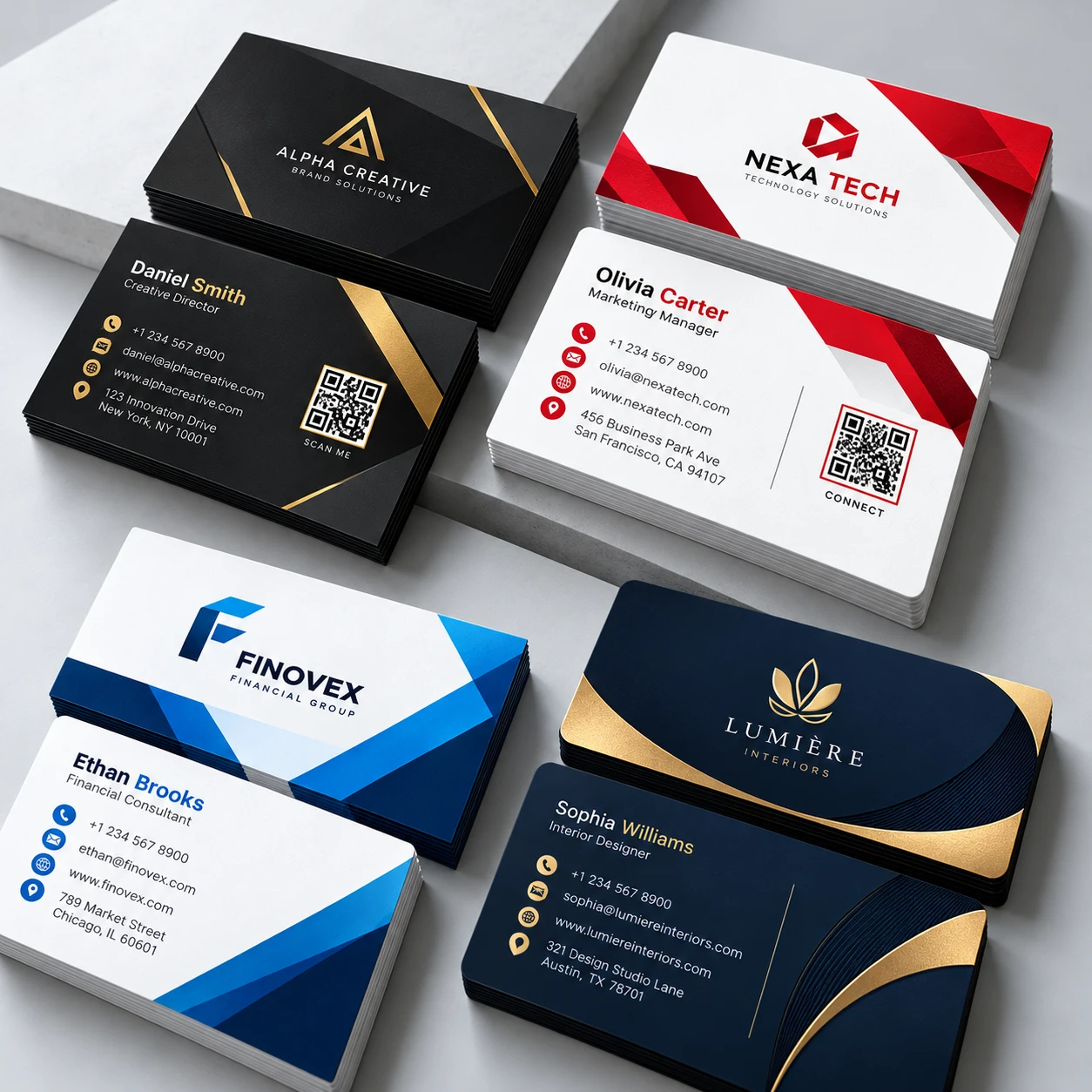 Business card design is the process of arranging your brand identity, contact information, typography, colors, and visual elements into a compact, professional format. A successful design balances visual appeal with practical functionality.
A business card typically includes:
- Full name and professional designation
- Company name and logo
- Contact number and business email
- Website URL
- Office address, when relevant
- Social media details or a QR code
The goal is to make these details easy to find while creating a visual identity that people associate with your business.
Why Is Professional Business Card Design Important?
Although digital communication is essential for modern businesses, physical business cards remain useful at conferences, exhibitions, client meetings, trade shows, and networking events.
Creates a Strong First Impression
Your business card may be one of the first branded materials a potential client receives from you. A clean layout, readable typography, and professional finish can help establish trust and credibility.
Strengthens Brand Recognition
Consistent colors, fonts, logos, and design elements help people recognize your business. Your card should complement your website, company profile, social media graphics, and other marketing materials.
At Inleads IT Solution, we recognize that consistent branding helps businesses present a more unified image across their digital and offline channels.
Makes Contact Information Accessible
A business card allows potential customers, suppliers, and partners to keep your details readily available. A carefully organized layout helps recipients find the information they need without unnecessary distractions.
Supports Business Networking
For professionals and business owners in Malaysia, business cards remain practical during face-to-face introductions. They provide a simple way to exchange contact information and encourage future conversations.
Popular Business Card Design Styles
Choosing the right style depends on your industry, audience, and brand personality.
Modern Minimalist Business Card Design
Minimalist designs use clean typography, generous white space, and simple geometric elements. They are suitable for technology companies, consultants, architects, and corporate professionals. This style works particularly well when you want your logo and contact details to remain the primary focus.
Creative and Professional Business Card Design
Creative layouts use distinctive shapes, contrasting colors, and carefully arranged visual elements. They can suit marketing agencies, photographers, graphic designers, and creative businesses. The key is to make the design distinctive without compromising readability.
Elegant and Luxury Business Card Design
Premium designs often feature dark backgrounds, restrained typography, metallic foil, embossed logos, or textured paper. These elements can help communicate exclusivity and attention to detail. Law firms, luxury service providers, premium real estate businesses, and boutique brands may benefit from this approach.
Technology-Inspired Business Card Design
Technology companies and software developers can use grid systems, geometric patterns, subtle technical illustrations, and modern typography to communicate innovation. For businesses seeking a professional digital identity, this style can complement website design, software development services, and other technology-focused branding materials.
Essential Elements of an Effective Business Card
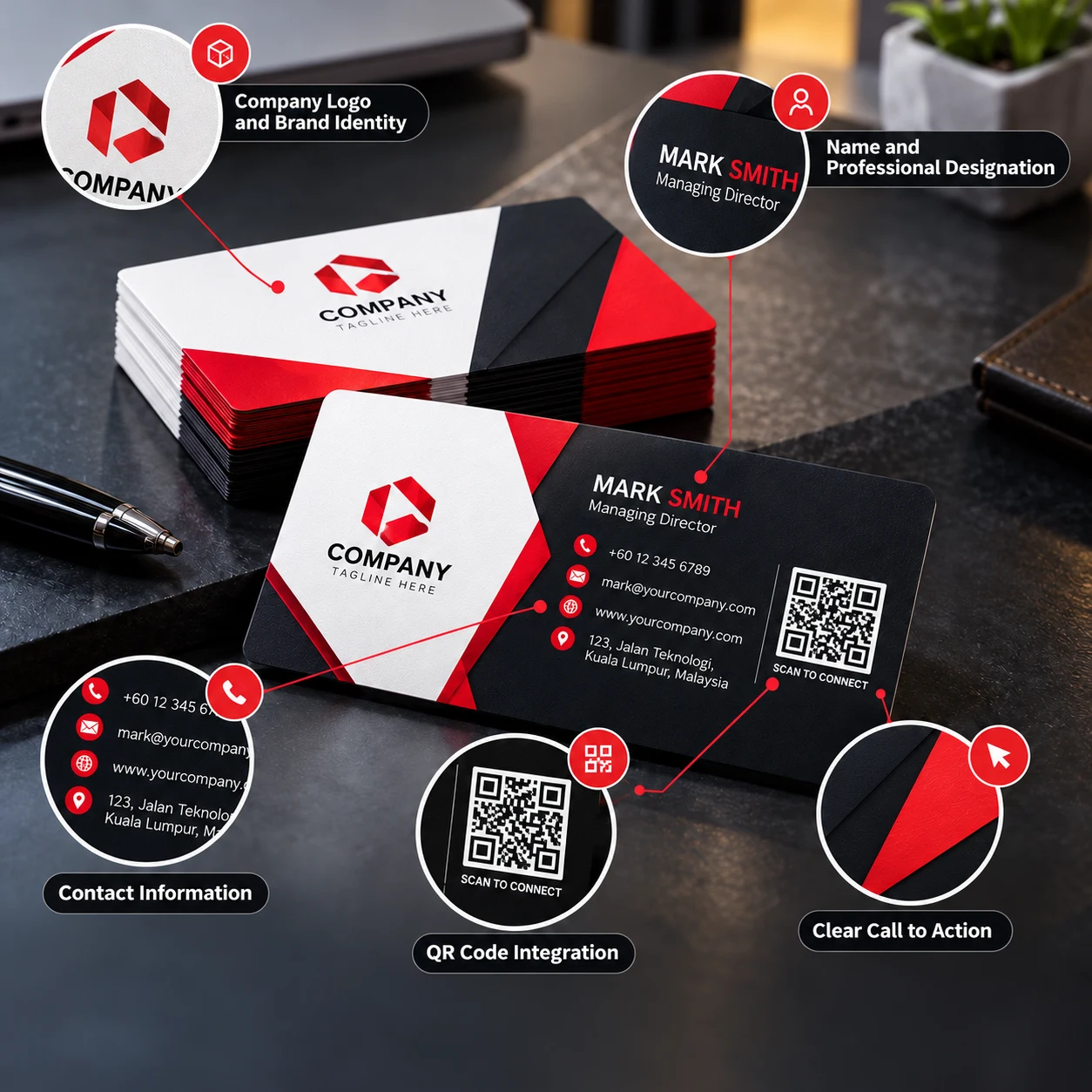 A visually attractive card must also be practical. Include the following elements when planning your layout.
- Company Logo and Brand Identity: Your logo should be clear, recognizable, and reproduced at a suitable size. Use consistent brand colors and typography to align the card with your other marketing materials.
- Name and Professional Designation: Make the person’s name easy to identify. Include a job title when it helps explain their role or expertise.
- Contact Information: Add the most useful contact details, such as a telephone number, professional email address, and company website. Avoid overcrowding the card with unnecessary information.
- QR Code Integration: A QR code can connect printed materials with digital resources. Depending on your business needs, it can link to your website, portfolio, LinkedIn profile, WhatsApp contact, or digital contact card. Test the QR code before printing and ensure that it has enough contrast and clear space around it for reliable scanning.
- Clear Call to Action: Where appropriate, a short prompt such as “Visit Our Website” or “Scan to Connect” can encourage recipients to take the next step.
Standard Business Card Sizes in Malaysia
The standard size commonly used by Malaysian printing providers is approximately 90 mm × 54 mm. However, specifications may vary between printers, so confirm the dimensions before preparing your final artwork.
Other options include slim cards, vertical layouts, square formats, and custom-shaped designs.
For a professional printing result, consider these specifications:
- Finished size: Commonly 90 mm × 54 mm in Malaysia
- Bleed: Often 3 mm on each side, subject to printer requirements
- Safe zone: Keep important text and logos comfortably inside the cutting edge
- Resolution: Use 300 DPI for raster images
- Color mode: Prepare artwork in CMYK when required by the printer
- File format: Print-ready PDF is commonly preferred; vector artwork is useful for sharp logos and typography
For example, a 90 mm × 54 mm card with 3 mm bleed on all four sides requires an artwork canvas of 96 mm × 60 mm. Always follow the printer’s supplied template and technical instructions.
Choosing the Right Paper and Printing Finish
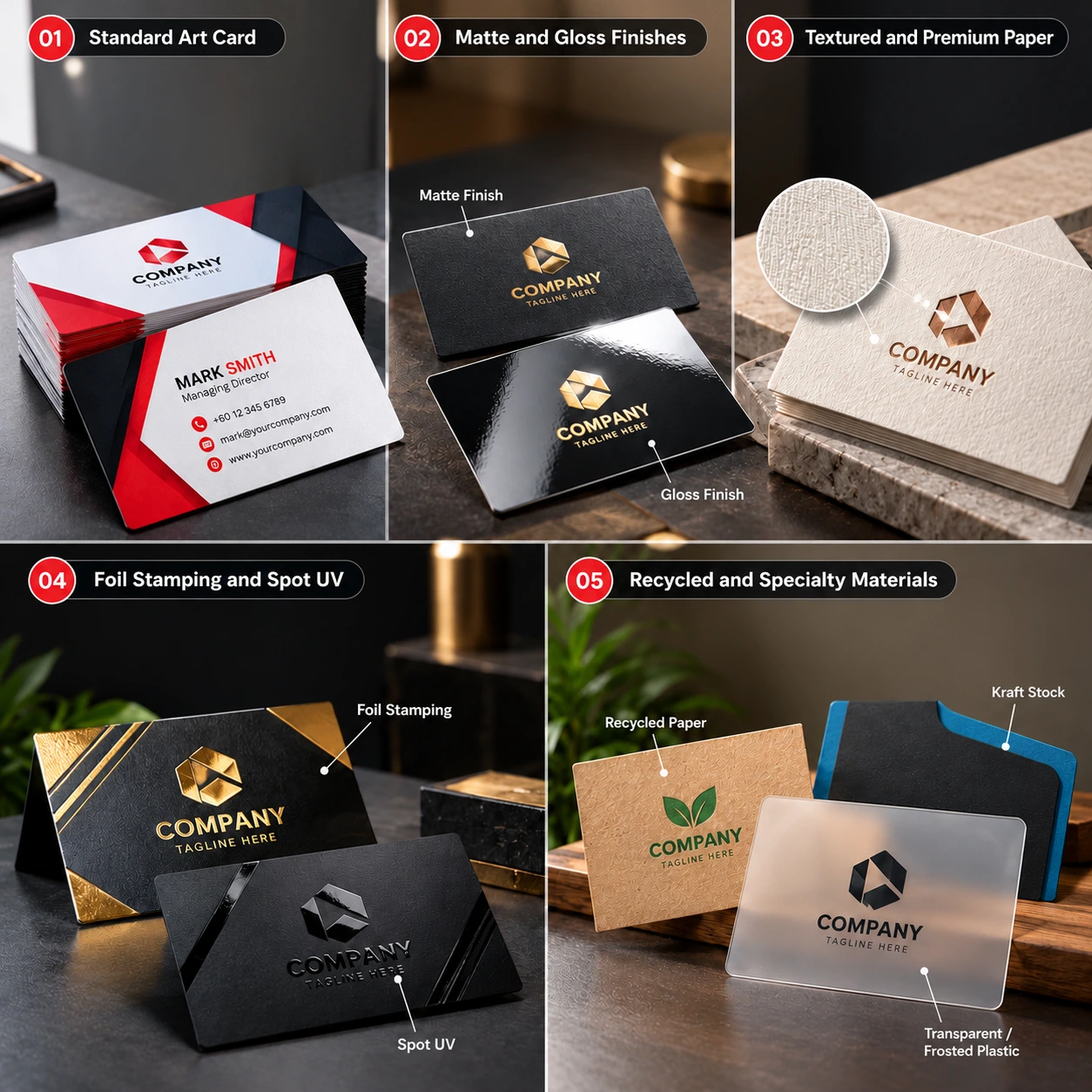 The material and finish influence how a business card looks and feels. Your choice should reflect your budget, intended audience, and brand positioning.
- Standard Art Card: Art cards are a common option for everyday business cards, networking events, and bulk distribution. It supports full-color printing and provides a practical balance between cost and presentation.
- Matte and Gloss Finishes: Matte finishes offer a smooth, understated appearance, while gloss finishes create a brighter, more reflective surface. The right choice depends on your design and preferred visual effect.
- Textured and Premium Paper: Linen, cotton, and other textured stocks can create a distinctive tactile experience. These options may suit professional services, boutique businesses, and premium brands.
- Foil Stamping and Spot UV: Gold or silver foil can highlight a logo or selected text. Spot UV adds a glossy finish to specific areas, creating contrast against a matte background.
- Recycled and Specialty Materials: Recycled paper, kraft stock, and transparent or frosted plastic can help businesses develop a more distinctive identity. Confirm durability, print compatibility, and production requirements with your chosen supplier.
Best Practices for Business Card Design
Follow these practical guidelines to create a card that looks professional and remains easy to use.
- Keep the layout simple. Prioritize the logo, name, and essential contact details rather than including every available piece of information.
- Use readable typography. Choose fonts that remain clear at small sizes. As a general guideline, aim for around 8–10 pt or larger for contact details where space allows, and print a proof to check readability.
- Maintain sufficient white space. Empty space helps separate information and makes the design easier to scan.
- Follow your brand guidelines. Use consistent colors, typography, logo placement, and visual styles across your website and printed materials.
- Check every detail. Proofread names, job titles, phone numbers, email addresses, URLs, and QR codes before approving the design.
- Request a print proof. Review the final artwork for alignment, color, trim safety, and overall quality before placing a large order.
How Business Card Design Supports Your Digital Branding
A business card can work alongside your website and digital marketing activities to create a more consistent brand experience.
For example, a QR code can direct a prospective client to a service page, company profile, portfolio, or contact form. This makes it easier for people to continue engaging with your business after meeting you.
Your printed materials should use the same logo, brand colors, typography, and messaging as your website. This consistency helps customers recognize your business across different channels.
Build a Consistent Brand with Inleads IT Solution
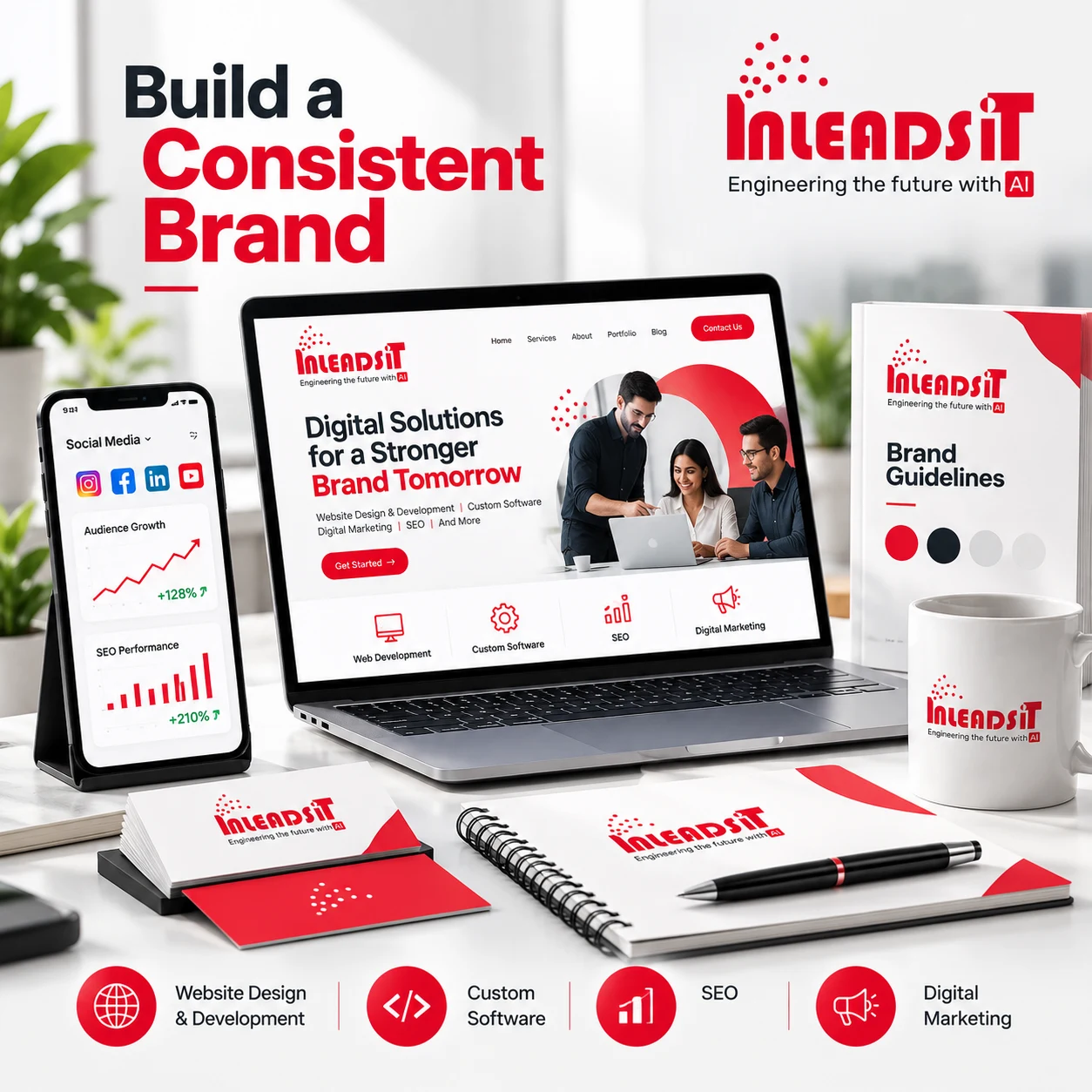 Inleads IT Solution helps businesses strengthen their digital presence through website design and development, custom software solutions, SEO, and digital marketing services.
A professional brand experience extends beyond a single business card. Your website, online content, company profile, and marketing materials should work together to communicate your expertise and business value.
By aligning your visual identity with your digital strategy, you can create a more consistent experience for potential customers and support your wider business growth objectives.
Whether you are launching a new business or refreshing an existing brand, investing in professional design and a well-planned digital presence can help you communicate more effectively with your audience.
Conclusion
Effective business card design combines clear typography, thoughtful layouts, consistent branding, and suitable printing materials. By choosing the right design style, including essential contact information, and following local printing specifications, Malaysian businesses can create cards that look professional and leave a lasting impression.
For stronger results, connect your printed branding with a well-designed website and a consistent digital marketing strategy.
Looking to strengthen your business’s digital presence? Contact Inleads IT Solution to explore website design, software development, SEO, and digital marketing solutions tailored to your business goals.
We also provide Domain Registration & AI Hosting, Web Design, Web Development, Software Development, Logo Design, UI/UX Design, Company Profile Design, and Video Editing services
Find us (Inleads IT Solution) on Google map.